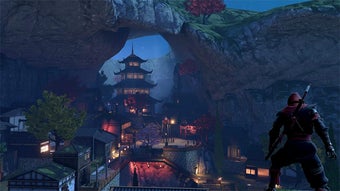
Aragami 2: Shadow-stealth action tuned for cooperative ninja play
Aragami 2, developed by Lince Works, is a Play Station 4 stealth-action adventure that places you in the role of a shadow assassin defending your clan. The experience centers on using Shadow Essence to move through the war-torn Rashomon Valley, hiding, teleporting, and engaging in skill-driven encounters. The campaign supports solo play or three-player online co-op and includes character customization, craftable gear, and unlockable abilities. It targets players drawn to coordinated stealth and tactical infiltration.
How does Aragami translate ninja stealth into mission-driven play?
Aragami operates as a mission-based stealth title built around a central hub, Kakurega Village, where players pick and replay contracts in Rashomon Valley. Each mission asks the player to infiltrate guarded zones, perform assassinations or objectives, then extract, which frames the core loop as quiet planning followed by tense execution. The hub structure gives discrete goals and short-play sessions that suit both focused runs and repeated attempts to perfect a route.
Does cooperative play change the stealth equation?
Cooperative design pushes stealth toward coordination, since the campaign supports up to three players working together. The game pairs high-mobility traversal with mechanized encounters, so teams can split tasks: one player distracts while another secures a route. Combat is described as skill-based and reactive, which means detection shifts the session from careful hiding to precise, timing-based skirmishes where player technique matters more than repeated button presses.
What does the game’s world and movement feel like?
The setting, described as the war-torn Rashomon Valley, emphasizes vertical environments that reward climbing, wall-running, and long-range shadow leaps. Movement options create a sense of height and speed, encouraging players to approach problems from above or the dark. That focus on vertical traversal gives levels a layered structure, where sightlines and elevation shape available stealth paths and tactical choices during an infiltration.
Is progression and difficulty tuned for stealth specialists or action players?
Progression relies on three distinct skill trees, 42 unlockable abilities, and craftable weapons and armor, which supports different builds and play styles. The combat system's emphasis on player skill means encounters demand timing and positioning rather than button-mashing. Critics and players noted, however, that some mission designs repeat similar objectives and that technical issues appeared at launch, both factors that influence long-term engagement for some players.
In summary, Aragami suits coordinated stealth players who enjoy mastery, with caveats
In summary, Aragami is a compelling pick for players who want cooperative, movement-focused stealth and the satisfaction of mastering timing-based combat. Players seeking varied mission structure or a polished launch state may be less satisfied, since repetitive objectives and reported technical roughness reduce momentum over extended play. For groups that value teamwork and vertical play, the experience rewards practiced coordination and tactical patience.